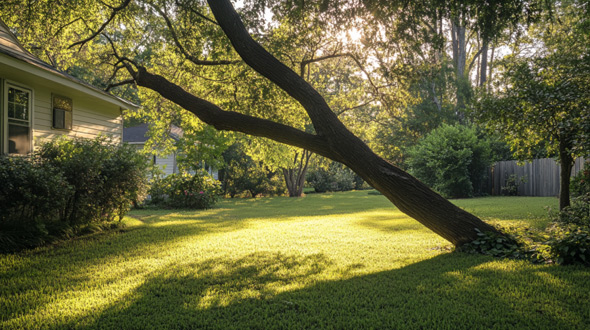
Noticed a leaning tree in your yard? This article covers why trees lean, how to fix them, and ways to prevent future issues. Understand the causes and learn practical solutions to ensure tree stability and safety.
Key Takeaways
- Understanding the causes of tree leaning—including strong winds, poor soil conditions, root damage, and improper planting—is crucial to correctly addressing and preventing the issue.
- Assessing the danger of a leaning tree involves evaluating the severity of the lean, inspecting the tree’s condition for signs of decay or disease, and identifying external stressors like construction or soil erosion.
- Correcting a leaning tree may involve straightening young trees, using stakes and supports, and seeking professional arborist solutions for severe cases to ensure safety and stability.
Why Do Trees Lean?
Trees can lean for various reasons, and understanding these can help you take the proper steps to correct and prevent your tree from leaning. Some common causes of tree leaning include:

- Strong winds
- Poor soil conditions
- Root damage
- Improper planting techniques
Not all leaning trees pose an immediate threat, yet understanding the cause is key to defining the best course of action.
Impact of Strong Winds and Storms
Intense storms and strong winds can exert enormous force on trees, causing their roots to lose their grip on the soil. This often results in a storm-damaged tree, tree leaning, or even uprooting. Trees with already compromised root systems are particularly vulnerable during such weather events.
When a wind storm hits, the direction and intensity of the wind can push a tree beyond its tipping point. Heavy rains accompanying these storms can further weaken the soil, making it easier for trees to lean or fall.
Soil Conditions and Root Health
Soil conditions play a significant role in tree stability. Overly wet or saturated soils can cause tree roots to lose their grip, leading to leaning or toppling. Heavy rain or poor drainage can weaken a tree’s root system, increasing the risk of it falling.

Additionally, compact soil can prevent a tree’s roots from anchoring deeply, making trees more prone to leaning. Assessing the soil’s drainage capability is vital since poor drainage can undermine a tree’s stability. In sandy soil, the presence of root rot, indicated by mushrooms growing around the tree base, also compromises tree stability.
Improper Planting Techniques
Improper planting techniques are another common cause of leaning trees. Some tips to avoid this issue include:
- Planting trees at the correct depth to prevent girdling roots, which can cause the tree to lean.
- Ensuring that the tree is stable and properly supported during the planting process.
- Checking the soil conditions and making any necessary amendments to provide a stable foundation for the tree.
Following these planting techniques can help prevent your trees from leaning and ensure their healthy growth.
Not removing the burlap or wire basket from the root ball during planting can prevent proper root growth and support, leading to leaning. A tree planted straight, with stable soil, and in areas shielded from strong winds helps prevent future leaning.
Assessing the Danger of a Leaning Tree
Assessing the danger of a leaning tree involves evaluating the lean angle, checking the tree’s condition, and identifying external stressors. When trees are leaning, they risk causing damage to nearby structures or endangering people in high-traffic areas. Promptly dealing with these potential hazards is of high importance. The proximity to structures like homes or power lines greatly affects the potential risk it poses.
Evaluating the Angle of the Lean
The severity of the lean angle can indicate potential danger. A tree leaning at an angle of 45 degrees or more typically signals a high risk of failure. A sudden lean is often more concerning than a gradual one, as it can indicate a swift change in the tree’s stability.
In assessing a tree’s lean, the speed at which the lean occurred should be taken into account. Trees that lean gradually over time may be less of an immediate concern than those that suddenly tilt.
Checking the Tree’s Condition
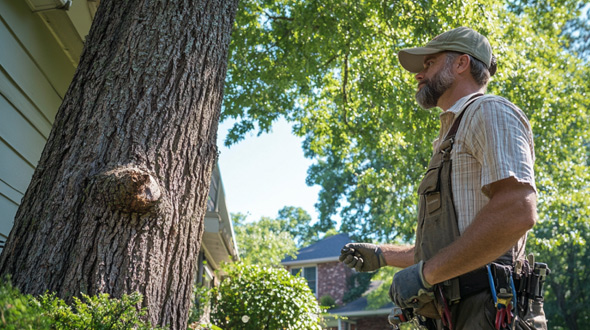
Inspecting the tree trunk and branches for signs of decay, disease, or insect infestation helps determine its stability and risk of falling. By examining the tree’s structure, look for dead branches, oozing sap, or discolored leaves, which are indicators that a tree’s health may be compromised.
Assess the roots for any signs of decay or disease, as rotten or decaying roots often cause trees to lean. The overall health of a leaning tree is paramount; healthy trees with slight leans pose a lesser risk of falling than diseased or rotting ones.
Identifying External Stressors
External stressors, such as nearby construction, can destabilize a tree’s root system, increasing the likelihood of a tree leaning. Changes in the landscape, like soil erosion, can lead to a tree tilting. Heavy rains can exacerbate this by causing soil erosion.
Trees can also lean after being damaged by heavy storms, such as snowstorms or freezing rain. Identifying these external stressors is key to comprehending why a tree might be leaning.
How to Correct a Leaning Tree
Correcting a leaning tree involves straightening young trees, using stakes and supports, and seeking professional arborist solutions when necessary.
Leaning trees can often be fixed with the right approach, but sometimes, professional help is required to stake a leaning tree.
Straightening Young Trees
Straightening young trees is best done when the soil is moist and pliable, often during spring. If a strong storm completely uproots a small tree, assess it to determine if it is salvageable. To straighten the tree, follow these steps:
- Remove soil from exposed roots.
- Gently straighten the tree.
- Pack soil around the roots to secure the tree in an upright position.
- Stake the tree for support.
The method for tree straightening, especially for a small tree, includes pushing the tree upright, ensuring the soil is moist, and securing it with stakes. Some arborists recommend staking young trees for the first year to allow the trunk to flex and develop stronger wood and root systems.
Using Stakes and Supports
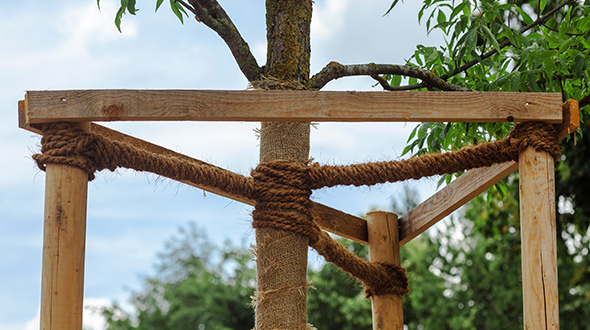
Position the stakes on the upwind side of the tree and drive them into the ground at a 45-degree angle toward the trunk. The stakes should be positioned to allow the points of contact to gently secure and pull the trunk and/or branches as desired.
To straighten a central leader, use three staking points in a triangle around the specimen with attachments secured at different heights. Over time, gradually release the tension of the cables to test whether the tree can stand on its own.
Professional Arborist Solutions
Understanding when to call for professional help is key in addressing leaning trees. A certified arborist can employ advanced techniques such as cabling and bracing to stabilize a leaning tree.
Tree removal might be necessary if the lean poses a significant risk and other correction methods are not feasible. Always consider professional solutions for severe cases to ensure safety.
Long-Term Care for Straightened Trees
Long-term care for straightened trees includes monitoring and adjusting support, ensuring proper watering and nutrients, and regular pruning and maintenance. This sustained care is vital for keeping the tree stable and healthy.
Monitoring and Adjusting Support
Regularly inspecting trees for early signs of instability helps prevent leaning. Ropes or cables should be threaded through some form of pliable sleeve to avoid direct contact with the tree trunk, which can cause damage.
There should be a small amount of slack in the ropes to allow the tree trunk to move naturally. This will help prevent any unnecessary strain on the tree. Once the tree’s roots are firmly established, stakes should be removed after one year.
Ensuring Proper Watering and Nutrients
Appropriate watering is of utmost importance. Here are some guidelines to follow:
- Water the root zone deeply until the top 6 to 9 inches of soil are moist.
- Monitor soil moisture regularly and water when the top 6 to 9 inches are dry.
- Avoid light watering as it promotes shallow roots susceptible to drought stress.
- Adjust watering frequency based on seasonal temperature changes and soil type.
- Additionally, avoid overwatering to prevent root decay.
Adding mulch around trees helps protect roots and maintain soil moisture.
Pruning and Maintenance
Pruning is an essential practice for preserving a tree’s health and stability by eliminating weak or compromised branches. Pruning should focus on removing damaged or diseased branches to improve the tree’s stability.
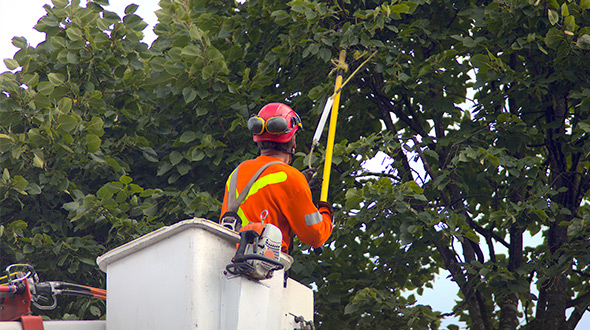
Regular maintenance through pruning helps shape the tree and reduce wind resistance, preventing future leaning.
Preventing Future Leaning
Preventing future leaning involves choosing the right planting site, using proper planting techniques, and ongoing tree care. By taking preventive measures, you can ensure your trees grow straight and stable.
Choosing the Right Planting Site
Consider soil quality and drainage when selecting a planting site. Poorly drained soil can lead to erosion, contributing to leaning trees. Soil compaction encourages shallow root growth, which is less stable and more prone to causing trees to lean.
Trees requiring full sun need at least six hours of sunlight daily. Choose a site that meets these light requirements to promote healthy growth.
Proper Planting Techniques
Correct planting techniques are key to healthy root development. Plant trees at the correct depth, avoiding planting too deeply or too shallow. Remove any burlap or wire baskets from the root ball before planting to encourage root growth.
Initial support with stakes can stabilize a young tree, helping it grow straight.
Ongoing Tree Care
Continual tree care is vital for keeping trees healthy and preventing leaning. Mulching around the base of trees helps retain moisture and maintain tree health. Regular pruning helps to shape the tree and reduce wind resistance, which can prevent future leaning.
Consistent watering during dry spells prevents root stress and maintains stability.
Leaning Tree Summary
In summary, leaning trees can pose significant risks, especially if they are near structures or in high-traffic areas. Understanding the various reasons why trees lean—such as strong winds, poor soil conditions, root damage, and improper planting techniques—enables you to take appropriate corrective actions. Assessing the danger of a leaning tree involves evaluating the lean angle, checking the tree’s condition, and identifying external stressors.
Correcting a leaning tree can often be achieved through methods such as straightening young trees, using stakes and supports, or seeking professional arborist solutions. Long-term care, including regular monitoring, proper watering, nutrient management, and pruning, is essential for maintaining the stability and health of straightened trees. By choosing the right planting site, using proper planting techniques, and ongoing tree care, you can prevent future-leaning and ensure your trees grow strong and upright. Remember, a proactive approach is the best way to keep your trees healthy and secure.
Frequently Asked Questions
What are the main reasons trees lean?
Trees lean mainly due to strong winds, poor soil conditions, root damage, and improper planting techniques.
How can I tell if a leaning tree is dangerous?
You can tell if a leaning tree is dangerous by assessing its angle, inspecting its condition for decay or disease, and identifying any external stressors such as nearby construction or soil erosion.
When is the best time to straighten a young tree?
The best time to straighten a young tree is when the soil is moist and pliable, which is typically during the spring season.
What should I do if a tree leans after a storm?
If a tree leans after a storm, you should first evaluate if it can be salvaged and then proceed to straighten it, remove soil from exposed roots, and use stakes for support. This will help provide stability and aid in the tree’s recovery.
How can I prevent my trees from leaning in the future?
It’s crucial to choose the right planting site, apply proper planting techniques, and provide ongoing care such as mulching, watering, and pruning to prevent your trees from leaning in the future. These actions will help maintain the stability and health of your trees.
(678) 505-0266