If you’ve recently received a quote to remove a tree from your Marietta property, you might be wondering why the number seems so high. You’re not alone—it’s one of the most common questions homeowners ask when they first dive into tree care.

The short answer is that tree removal combines several expensive elements into a single service: dangerous work high off the ground, skilled labor from trained and certified workers, heavy specialized equipment, comprehensive insurance coverage, and complete cleanup. When you add in the complexity of mature Georgia hardwoods growing inches from homes and utility lines, the price reflects the genuine risk and expertise involved.
This guide breaks down exactly where your money goes when you hire a professional tree service in Marietta. By the end, you’ll understand the key factors that drive pricing and feel confident evaluating quotes for your property.
Quick Answer: Why Tree Removal Costs So Much
Tree removal in Marietta is expensive because it’s not simply “cutting down a tree.” It’s a multi-step process requiring professional planning, heavy equipment, physical labor, insurance, and thorough cleanup—all performed in one of the riskiest work environments in any trade.
Large pines, oaks, and sweetgums that thrive around Marietta often tower 60 to 80 feet tall and grow within feet of roofs, driveways, fences, and power lines. That proximity transforms what might seem like a straightforward job into a technical operation requiring careful rigging, sectional cutting, and, at times, cranes.
When you pay for professional tree removal, you’re paying for:
- Safety and liability protection for your home and the crew
- Expert planning to avoid damage to structures, landscaping, and utilities
- Proper equipment to handle heavy wood at height
- Full cleanup, including debris hauling and often stump grinding
- Insurance coverage that protects you if something goes wrong
Removing a 70-foot red oak with branches hanging over your roof is a completely different job than taking out a small crape myrtle in an open front yard. The oak may require a full crew, climbing gear, rigging systems, and possibly a crane—and it can take most of the day. By contrast, two workers can remove a crape myrtle in under an hour. That’s why tree-removal quotes can range from a few hundred dollars to several thousand, even for homes on the same Marietta street.
Main Factors That Make Tree Removal Expensive
Every tree in Marietta is unique, and pricing reflects that reality. A quote isn’t pulled from a standard menu—it’s calculated based on multiple combined factors that determine how much time, equipment, and risk the job involves.
The key cost drivers include:
- Tree size and height – Taller trees with larger trunks require more cuts, more rigging, and more labor hours
- Location and access – Trees near structures, in fenced backyards, or on slopes increase complexity
- Tree condition – Dead trees or compromised trees may be more dangerous to work on, sometimes requiring specialized approaches
- Risk level – Proximity to homes, utility lines, or busy streets increases safety requirements.
- Debris volume – Larger trees produce more brush and logs that must be chipped, cut, and hauled away
- Stump grinding – This is often a separate line item that adds to the total
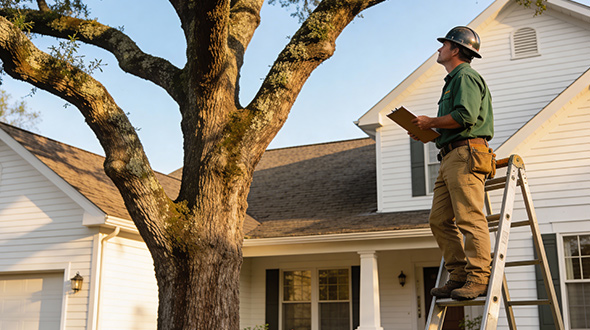
Typical removals in Marietta range from small ornamental trees under 20 feet to mature oaks or pines exceeding 80 feet. The cost difference between these extremes is substantial, and understanding the factors below will help you see why.
Tree Size, Species, and Complexity
Bigger and more complex trees require more time, more crew members, and heavier equipment. This is the most intuitive cost driver—but the details matter.
Small trees under about 20–25 feet in an open lawn are usually the least expensive to remove. A crew of two or three can often handle these in a few hours with basic equipment. Think ornamental trees, young pines, or small hardwoods with limited canopy spread.
Mature hardwoods like red oak, white oak, and hickory—all common around Marietta—cost significantly more because of:
- Greater height requires more climbing or aerial lift time
- Larger trunk diameter that takes longer to cut through
- Dense wood that’s harder on chain saw blades and heavier to rig and lower
- Wide canopy spread that may extend over roofs, driveways, or neighboring yards
Tall pines present their own challenges. A 70-foot loblolly pine might have a relatively narrow canopy, but its height means more climbing, more rope work, and larger trunk sections to lower safely.
Wide canopies over structures require sectional cutting and rigging. Instead of felling the tree in one direction, tree workers must cut branches and trunk pieces individually, tie them off, and lower them with controlled friction devices. This can mean dozens or even hundreds of separate cuts for a single tree.
A rough progression to expect:
- Small ornamental trees (under 25 feet): Often $300 to $500
- Mid-size shade trees (30–50 feet): Typically $500 to $1,500
- Large pines or oaks (60–80+ feet): Commonly $1,500 to $3,000 or more, especially near structures
These ranges are general—your actual quote depends on the specific circumstances covered in the sections below.
Location, Access, and Obstacles on Your Marietta Property
Where the tree stands on your Marietta lot can change the tree removal job from simple to highly technical—sometimes doubling or tripling the price compared to a similar tree in an open space.
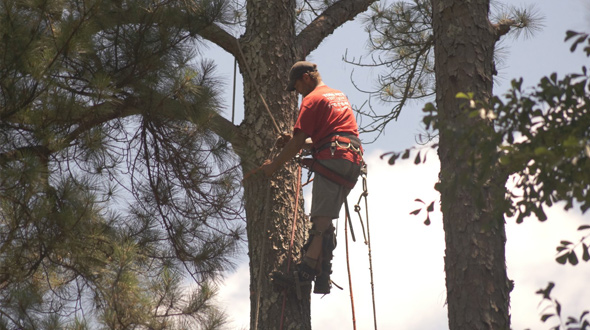
Trees close to structures are the most common challenge in suburban Marietta. When branches hang over your roof, deck, pool, air conditioning unit, or garage, crews can’t just drop limbs. They must:
- Tie off each section with ropes
- Lower pieces slowly using rigging systems
- Control swing so nothing contacts the structure
- In some cases, pad roofing or using tag lines to guide each piece safely
Limited access in older Marietta neighborhoods creates additional obstacles. Narrow driveways, retaining walls, mature landscaping, and fenced backyards may prevent bucket trucks or cranes from getting close to the tree. When heavy equipment can’t reach the work zone:
- Climbers must do the entire job with ropes
- Logs must be carried out by hand, dolly, or mini skid steer
- Plywood may be laid down to protect lawns and irrigation systems
- Overall labor hours increase substantially
Slopes and challenging terrain add safety measures and time. Marietta has plenty of properties with creek banks, hillsides, and uneven ground. Trees in these locations may require climbing-only removals, extra safety rigging, and careful planning to prevent logs from rolling or sliding.
Proximity to roads can require traffic control on busy streets. If branches need to be lowered over a public road or sidewalk, flaggers and additional flagging support may be necessary. This protects passing vehicles and pedestrians but adds to the overall bill.
High Risk, Safety Requirements, and Insurance Costs
Tree work is one of the most dangerous occupations in the United States, and Marietta tree crews face those same risks every day. Understanding this helps explain a significant portion of your quote.
Typical hazards tree workers encounter include:
- Working at heights with running chainsaws
- Handling heavy logs that can swing unpredictably on ropes
- Unpredictable wood failure in dead trees or compromised structures
- Proximity to electrical conductors running through or near the canopy
- Operating wood chippers and stump grinders with severe injury potential
Reputable companies in Marietta carry proper insurance to protect both their workers and your property:
- General liability insurance covers property damage if something goes wrong—a crushed fence, broken window, or damaged vehicle.
- Workers’ compensation insurance covers injuries sustained by crew members, protecting you from potential lawsuits if someone gets hurt on your property.
- Commercial vehicle and equipment coverage protects the trucks, chippers, and other machinery.
These insurance premiums are substantial—tree care companies pay among the highest rates of any trade due to the inherent risk. That cost is built into every job.
The “cheap tree guys” who offer dramatically lower prices often lack this coverage. If they damage your roof or a worker falls and gets injured, you could be left holding the bill.
Full safety protocols include:
- Climber and ground crew training
- Personal protective equipment (helmets, chaps, eye protection, hearing protection)
- Regular equipment inspections
- Pre-job safety briefings
- Established drop zones and communication procedures
This all adds cost—but it dramatically reduces the chance of accidents on a homeowner’s property. When you hire a professional business with a current insurance certificate and proper credentials, you’re paying for that protection.
Specialized Equipment Needed for Safe Tree Removal
Professional tree removal in Marietta relies on expensive, specialized equipment that must be purchased, maintained, fueled, insured, and operated by trained workers. This capital intensity is a major reason why prices aren’t as low as some homeowners expect.

Common equipment includes:
- Bucket trucks and aerial lifts – Allow workers to reach tall canopies more safely than climbing in many situations
- Cranes – Used for extremely large or hazardous trees, especially when a tree sits in a tight backyard with no fall zone or leans over a home
- Climbing gear and rigging systems – Harnesses, ropes, carabiners, pulleys, and friction devices for controlled lowering
- Wood chippers – Industrial machines that process branches into chips for hauling
- Stump grinders – Ranging from self-propelled units to large truck-mounted machines
- Mini skid steers and loaders – For moving heavy logs in constrained spaces
- Dump trucks and chipper trucks – For transporting debris off-site
A single bucket truck can cost well into six figures to purchase new. Cherry pickers and other aerial lifts require CDL-licensed operators. Cranes—whether owned or rented—can add hundreds to thousands of dollars per day to a job.
Ongoing costs include:
- Fuel for multiple vehicles and machines
- Regular maintenance and blade sharpening
- Tire replacement and fluid changes
- Insurance for each piece of equipment
- Eventual replacement as machines wear out
Equipment involves setting up properly on each job site, which takes time beyond the actual cutting. Mobilization—moving the machines to and from your property—is included in the tree removal cost, even if the work takes only a few hours.
For many large pines or oaks in established Marietta neighborhoods, cranes are the safest way to lift heavy trunk sections over homes without risking damage. That capability comes at a price.
Labor, Training, and Professional Expertise
Skilled tree workers and Certified Arborists invest years learning safe climbing, rigging, and removal techniques. That expertise is part of what you’re paying for when you hire a qualified arborist or reputable tree care company.
A typical Marietta removal crew includes:
- A climber who moves through the canopy, makes cuts, and sets rigging
- Ground workers who manage ropes, feed brush into the chipper, and maintain the drop zone
- An equipment operator handling the bucket truck, crane, or chipper
All of these roles require training and fair wages. Tree crews perform physically demanding work in Georgia heat and humidity, lifting heavy logs, controlling ropes under tension, and operating saws for hours at a time.
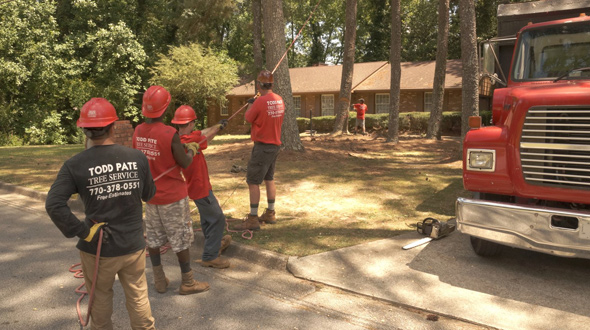
Labor expenses reflect:
- Competitive wages to attract and retain skilled workers willing to do high-risk work
- Overtime pay, during storm seasons, or emergency removals
- Time off for safety training and certification maintenance
- Benefits and workers compensation insurance
A certified arborist adds value by understanding tree biology, structural defects, proper pruning techniques, and the safest methods for dismantling specific species. Knowing that a dead pine is brittle and likely to shatter versus a flexible sweetgum that can be rigged normally makes a real difference in how the job is planned.
Crew’s competency credentials—including ISA certification, CTSP (Certified Tree Care Safety Professional) designation, and current industry credentials—add cost but improve job quality and reduce accidents. When a company representative hesitates to discuss qualifications, that’s a warning sign. Read this article, Do Tree Removal Companies Need to Be Licensed?
Permits, Local Regulations, and Utility Coordination in Marietta
Tree removal in Marietta may be subject to city or county rules, especially for larger or protected trees. While many private residential trees can be removed without formal permits, certain situations trigger additional requirements.
Homeowners should check current Marietta regulations or HOA rules when:
- Removing large shade trees above a certain diameter
- Taking out trees near the street or in front yard setbacks
- Working on properties in historic districts or designated buffer zones
- Removing trees in subdivision common areas
Typically permit fees, where applicable, range from $50–$150, but administrative time and paperwork add to the overall job cost. Follow the link for more on tree removal permitting in Marietta, Ga – toddsmariettatreeservices.com/removal-permit-ordinance/marietta-ga/
Utility coordination is often required when branches or trunks are near overhead lines. Georgia Power or local utility providers may need to:
- Temporarily de-energize lines
- Send their own line-clearance crews to trim back utility-side branches
- Approve the work plan before removal can proceed
This coordination takes time and can delay scheduling. Reputable tree care companies in Marietta will inform you about permit needs and handle the process, but expect a small administrative cost for that service.
Following local regulations prevents:
- Fines from code enforcement
- Work stoppages mid-job
- Requirements to replant trees later at your expense
- Complications when selling your home
Debris Handling, Hauling, and Stump Grinding
Cutting the tree down is only part of the job. Cleaning up in Marietta yards is often a major cost component that homeowners don’t initially consider.
Typical debris services include:
- Brush chipping – Feeding branches into an industrial chipper and loading chips for transport
- Log cutting – Bucking trunk sections into manageable pieces
- Hauling – Loading logs and chips into trucks and transporting to a disposal site or wood yard
- Yard cleanup – Raking sawdust, blowing off driveways and patios, removing small debris
- Quality check – Ensuring no rope remnants, hardware, or hazards are left behind
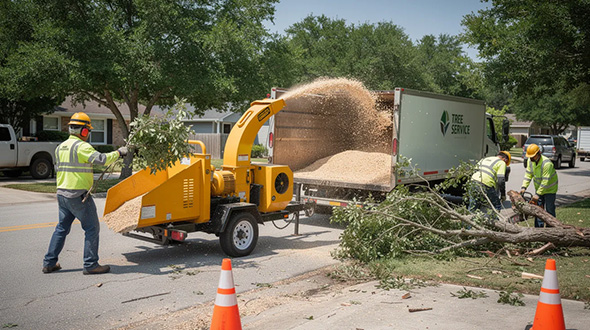
Fuel costs, dump fees, and labor for loading and unloading all factor into pricing. A large tree can produce multiple truckloads of material that must go somewhere.
Stump grinding is usually a separate line item, typically ranging from $100 to $500 per stump, depending on:
- Stump diameter
- Wood species (hardwoods take longer than softwoods)
- Access for the grinder
- Depth required (grinding deep enough for replanting in Georgia clay costs more)
Homeowners can sometimes save money by keeping firewood or wood chips on-site. If you have space and use for the material, ask whether the company offers a discount for leaving some or all debris.
How Long Tree Removal Takes and Why Time Matters
Job duration directly affects cost because crews and equipment are typically billed by the day or half-day. Understanding time factors helps you interpret quotes and set realistic expectations.
A small, simple tree in an open area may only take a few hours, while a large, complex removal in a tight Marietta backyard can consume a full day or more. Multiple trees on the same property extend the timeline further.
Time components include:
- Setup – Positioning equipment, establishing rigging points, identifying hazards, setting up drop zones
- Climbing and cutting – The actual removal work
- Rigging and lowering – Controlling each piece as it comes down
- Ground processing – Feeding the chipper, bucking logs, loading trucks
- Cleanup – Raking, blowing, final inspection
- Breakdown – Stowing gear, moving equipment off-site
Weather and ground conditions also affect timing. Muddy yards after heavy Georgia rain slow equipment movement and may require plywood protection for lawns. Excessive heat may require more frequent breaks to ensure crew safety.
Careful, unhurried work is safer and often cheaper in the long run than rushed work that risks dropping broken branches onto structures or limbs onto vehicles.
When getting quotes, ask each company how long they expect the job to take and what happens if conditions require extra time.
Why “Cheap” or DIY Tree Removal Can End Up Costing More
Trying to save money with DIY removal or hiring untrained tree workers in Marietta can lead to serious injuries, property damage, or legal issues that far exceed the cost of doing it right the first time.

DIY risks include:
- Falling from a ladder or losing control of a saw at height
- Dropping limbs on your own roof, vehicle, or a neighbor’s property
- Misjudging the tree’s lean and having the trunk fall toward your house
- Kickback injuries from improper chainsaw technique
- Electrical shock from contact with utility lines
Homeowners without training often underestimate how unpredictable trees can be—especially tall pines and leaning trees common around Marietta. Storm-damaged trees and dead trees are particularly hazardous because wood can fail without warning.
Hiring uninsured help creates liability:
- If an unlicensed worker damages your property, they may simply walk away
- If someone gets hurt on your job site, you could be responsible for medical bills
- Your homeowner’s insurance company may deny claims if unpermitted or uninsured work caused the damage
Compare the one-time cost of professional removal to potential costs of roof repairs ($5,000–$15,000), hospital visits ($10,000+), or lawsuits. The math usually favors hiring qualified companies.
A few bucks saved on the original job estimate can turn into high costs when things go wrong.
How to Save Money on Tree Removal Without Cutting Corners
Homeowners can manage costs while still hiring safe, reputable professionals. The goal is value—not just the lowest number.
Get multiple quotes:
- Request 3–5 written estimates from established Marietta tree care companies
- Ensure each quote includes the same scope of work (with or without stump grinding, debris haul-off, etc.).
- Compare apples to apples before making a decision.
Consider timing:
- Schedule non-emergency removals during slower periods (typically late winter or early spring before storm season)
- Crews may have better availability and occasionally offer modest discounts
- Avoid peak demand after major storms when prices and wait times spike
Ask about keeping materials:
- If you use firewood or have space for wood chips, ask whether leaving material on-site reduces the price
- Not all companies offer this, and you’ll need to handle the material yourself
Check insurance options:
- When a tree is storm-damaged and causes or threatens damage to covered structures, your homeowner’s insurance may help
- Clarify coverage with your insurance company before assuming they’ll pay—policies vary widely
- Document the damage with photos before any work begins
Choose value over lowest price:
- Verify that the company can provide a current insurance certificate
- Read reviews and ask about experience with similar jobs
- Look for clear, detailed written estimates rather than vague verbal quotes
- Confirm the company’s staff includes certified workers with proper credentials
When to Call a Certified Arborist in Marietta
Not every tree needs to be removed. A certified arborist can help Marietta homeowners determine whether removal is necessary—and, if so, how to approach it safely.
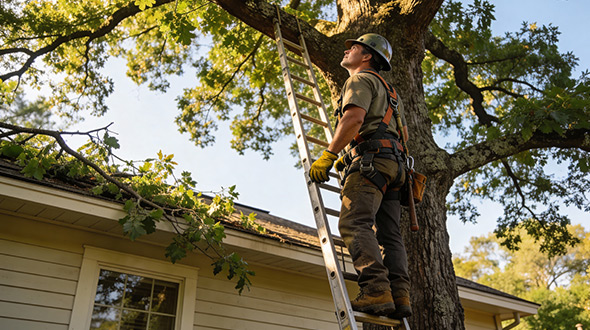
Situations that justify an arborist visit:
- Large tree directly over your house or driveway
- Visible decay, fungus, or mushrooms at the trunk base
- Major storm damage with broken branches or split trunks
- Significant lean that developed recently
- Roots affecting foundations, driveways, or sewer lines
- Trees you’re unsure about after a storm
Arborists can sometimes recommend alternatives to full removal:
- Pruning to reduce weight and wind resistance
- Cabling or bracing to support weak branch unions
- Targeted removal of hazardous limbs while preserving the tree
A qualified arborist understands local species and site conditions, helping them assess whether a tree is likely to fail in future storms. Trees are often salvageable with proper tree care—saving you money and preserving valuable shade.
Using a certified arborist adds a small cost but improves safety, protects long-term property value, and ensures recommendations are based on tree biology rather than guesswork.
When a company representative comes to give an estimate, ask about their credentials. Reputable companies will gladly share information about their team’s certifications and experience.
Viewing Tree Removal as an Investment in Safety and Property Value
Tree removal in Marietta is expensive because it requires high-risk work, skilled labor, heavy specialized equipment, comprehensive insurance coverage, and full cleanup in a single service. Every factor—from tree size and location to crew training and debris disposal—contributes to the final price.
Professional removal protects your home, your family, and your neighbors. It prevents the far higher costs that can result from storm damage, accidents, or liability claims when work is done by unqualified help.
Rather than viewing the cost as an unwelcome surprise, consider it an investment in safety and property value. Property owners who work with reputable, insured professionals gain peace of mind and a clean, safe result.
Your next steps:
- Walk your property and note any trees that concern you—leaning trunks, dead branches, proximity to your roof or utility lines
- Request quotes from 2–3 established Marietta tree companies for comparison
- Ask questions about insurance, crew qualifications, and what’s included in the estimate
- Consult a certified arborist if you’re unsure whether a tree needs removal or might be saved with proper care
Understanding the whole process helps you make informed decisions and ensures safety for everyone involved—from the tree crews working in your yard to your family sleeping under the roof those crews are protecting.
(678) 505-0266